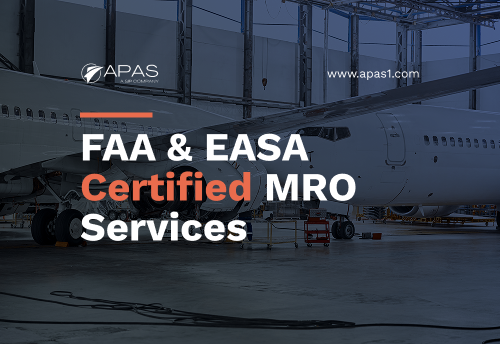
FAA & EASA Certified Aircraft MRO Services Explained
Understand FAA and EASA certified aircraft MRO services, key differences, and what operators must evaluate to ensure compliance and efficiency.

.png)
Understand FAA and EASA certified aircraft MRO services, key differences, and what operators must evaluate to ensure compliance and efficiency.
Selecting an MRO provider is not only a technical decision—it is a regulatory one.
For operators managing multi-jurisdiction fleets, working with an organization approved under both FAA Part 145 and EASA Part-145 is often essential to ensure compliance, avoid delays, and maintain operational continuity.
This article explains what FAA and EASA certification actually mean in practice, how they differ, and what operators should evaluate before selecting an MRO partner.
An aircraft maintenance organization must be approved by the relevant aviation authority to perform maintenance and issue return-to-service certification.
Both frameworks ensure that maintenance is performed under:
In simple terms:
Certification ensures that maintenance work is legally valid and technically reliable
For airlines, lessors, and maintenance planners, dual FAA & EASA approval is not a formality—it directly affects operations.
Aircraft can be maintained and released under different jurisdictions without requiring additional approvals or rework.
Avoids delays caused by:
Ensures that repairs and documentation will be accepted across:
For lessors, dual certification reduces friction during:
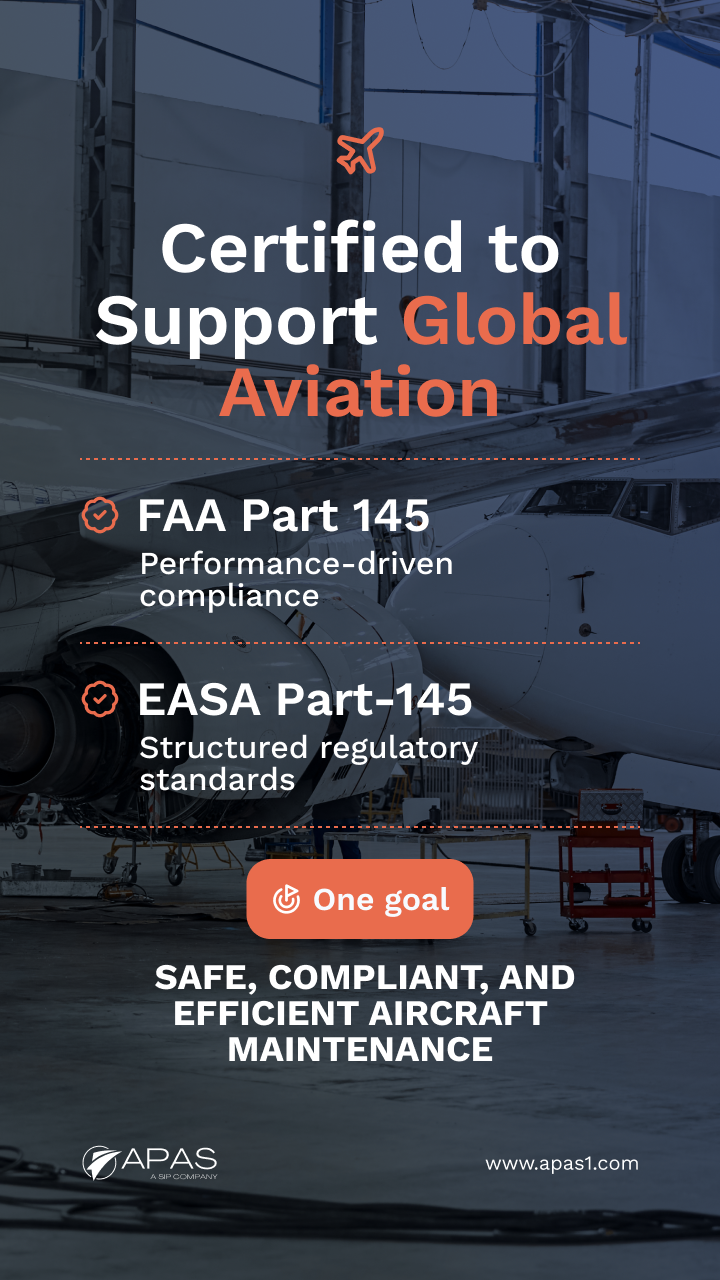
While FAA and EASA frameworks are aligned in many areas, operators should understand where differences may affect operations.
EASA typically requires:
Both require:
But EASA tends to enforce:
These documents certify that the component or repair meets regulatory requirements.
Certification alone is not enough.
High-performing MRO partners combine approval + execution capability.
Does the MRO have authorization for:
Can the organization:
Are records:
Does the MRO demonstrate:
Can the provider support:
Regulatory compliance and turnaround time are closely linked.
When certification is properly aligned:
When it is not:
The difference is not just compliance—it is operational efficiency
False. Approval does not equal capability. Execution quality varies significantly.
False. Certification enables compliance—but process control drives speed.
Not always. For international operations, dual approval often prevents delays and rework.
FAA and EASA certification define the framework for compliant maintenance, but they are only part of the equation.
For operators, the real value comes from working with MRO partners that combine:
This is what enables consistent, compliant, and predictable return-to-service
Explore how APAS supports operators with FAA and EASA-aligned MRO services across component repair, structural work, and operational support.
FAQS
An FAA Part 145 repair station is a certified maintenance organization authorized to perform aircraft maintenance and issue return-to-service under FAA regulations.
EASA Part-145 certification authorizes maintenance organizations to perform aircraft maintenance under European regulatory standards.
Dual certification allows maintenance and documentation to be accepted across jurisdictions, reducing delays and avoiding rework.
FAA is generally more performance-based, while EASA is more prescriptive and documentation-focused.