Learn how operators evaluate aircraft component repair vs replacement, including cost exposure, TAT visibility, documentation, parts availability, exchange, and DER pathways.
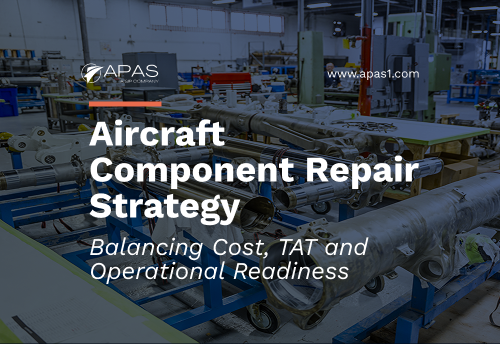
Aircraft Component Repair Services: How Operators Evaluate Repair vs. Replacement
When an aircraft component is removed from service, operators often need to decide whether repair, replacement, exchange, or another approved repair pathway is the most practical option.
The lowest invoice is not always the best decision. A repair may look more affordable at first, but parts availability, documentation, testing, turnaround time visibility, warranty terms, logistics, and operational urgency can all change the real cost of the decision.
For airline sourcing teams, operators, brokers, and maintenance planning managers, the objective is not simply to choose the cheapest option.
The objective is to choose the path that best supports component availability, technical confidence, documentation requirements, and operational planning.
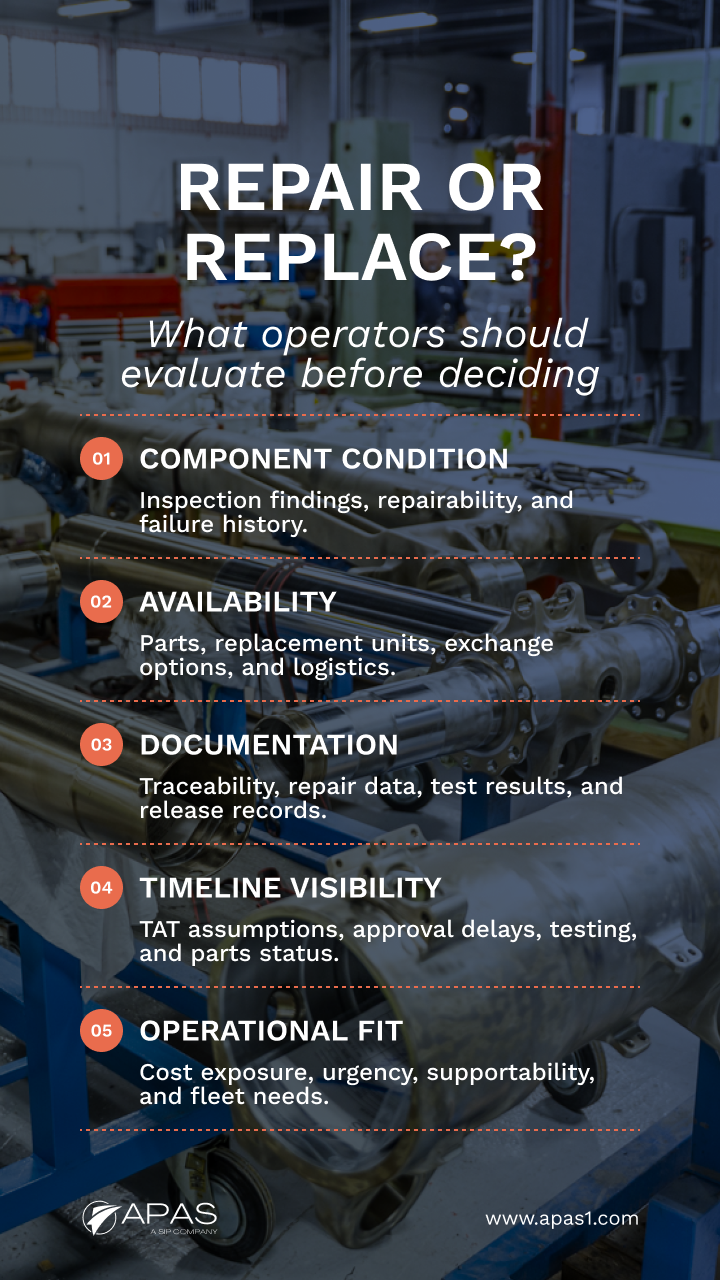
What Factors Should Operators Evaluate Before Choosing Repair or Replacement?
Repair vs. replacement should not be treated as a simple price comparison.
A stronger decision framework considers several factors:
component condition;
repairability;
approved repair data;
parts availability;
exchange or replacement availability;
documentation status;
testing requirements;
remaining useful life;
obsolescence risk;
warranty and post-repair support;
logistics and shipping requirements;
urgency or AOG exposure;
impact on serviceable inventory.
A component may be repairable, but the repair path may not support the operator’s timeline. Another component may be replaceable, but the replacement may be costly, difficult to source, or affected by documentation requirements.
That is why the repair decision should be supported by inspection findings, technical evaluation, clear documentation, and visibility into the available options.
How Does Component Lifecycle Stage Affect the Decision?
Lifecycle stage matters because not every component justifies the same repair investment.
A component expected to remain in service for a longer period may support a more extensive repair path if approved data, parts, and testing capability are available.
A component approaching the end of its useful life may shift the evaluation toward replacement or exchange, especially when repair cost, obsolescence risk, future supportability, and fleet retirement plans reduce the value of continued repair.
Operators should evaluate:
expected remaining service life;
fleet utilization plans;
component removal history;
repeat failure patterns;
availability of replacement units;
obsolescence risk;
expected future supportability;
warranty status;
repair history and documentation.
This is especially important for high-value rotables, legacy components, or units affected by supply chain constraints.
The question is not only:
Can this component be repaired?
The better question is:
Does the repair path make technical, operational, and commercial sense for this component at this stage of its lifecycle?
How Does Turnaround Time Affect Repair vs. Replacement?
Turnaround time can strongly influence the repair vs. replacement decision.
A repair option may be technically valid, but if the timeline is uncertain, the operator may need to evaluate replacement, exchange, or another support option to protect availability.
Repair TAT can be affected by:
induction delays;
teardown findings;
customer approval requirements;
parts availability;
testing requirements;
engineering review;
documentation gaps;
logistics or shipping coordination;
rework after failed testing.
Replacement or exchange may appear faster, but those options also depend on serviceable inventory, documentation, compatibility, core return conditions, logistics, and price.
For sourcing and maintenance planning teams, the key is to compare repair TAT visibility against other available options.
Useful questions include:
How is TAT defined?
Does the timeline start at receiving, teardown, approval, or repair start?
What assumptions are included?
What happens if additional findings appear?
Are parts available?
Is exchange or replacement available?
What documentation is required before shipment or installation?
How will updates be communicated?
A reliable decision requires more than a promised date. It requires visibility into what drives the timeline.
What Makes a Repair Recommendation Defensible?
One of the biggest concerns for operators is approving repairs without a clear technical or commercial justification.
A defensible repair recommendation should explain why the selected path makes sense.
It should be supported by:
inspection findings;
teardown report;
test results where applicable;
repair data reference;
parts availability;
repairability assessment;
replacement or exchange comparison;
documentation requirements;
estimated timeline assumptions;
warranty or post-repair support terms;
operational urgency;
approval requirements where applicable.
For example, a repair recommendation may be appropriate when the unit is within repairable limits, parts are available, testing can be performed, and documentation supports release.
Replacement may be more practical when repair data does not apply, required parts are not available, the component has repeat failures, documentation is incomplete, or the repair path creates too much uncertainty for the operator’s timeline.
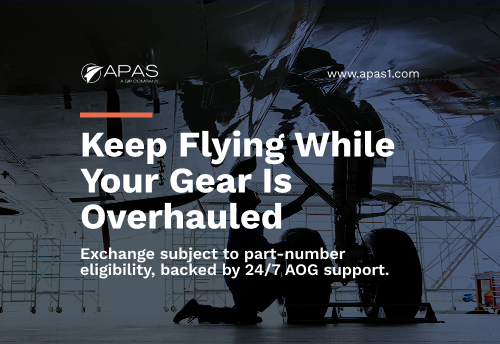
Exchange may be considered when a serviceable unit is available and the operator needs to reduce waiting time, subject to availability, documentation, and core return terms.
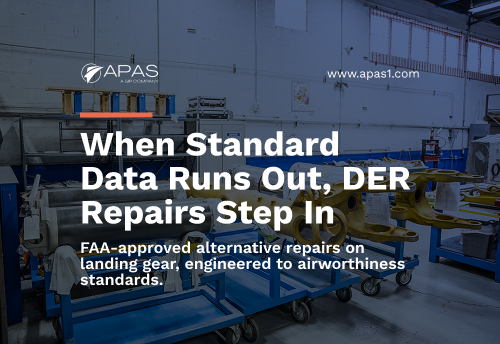
DER-approved repair pathways may be evaluated where applicable, when the component condition, approved data, engineering review, and regulatory context support that option.
The strongest recommendation is not always the cheapest. It is the one that is technically supported, clearly documented, and aligned with the operator’s availability needs.
What Operational Metrics Should Support the Decision?
Operators can use operational and reliability metrics to compare repair, replacement, exchange, and approved repair pathway options.
Useful metrics may include:
mean time between removal;
repeat removal rate;
no-fault-found rate;
component reliability history;
cost per flight hour;
serviceable inventory availability;
repair cycle visibility;
repair approval delays;
parts-related delays;
warranty claim history;
exchange usage;
AOG exposure.
These metrics help operators move beyond invoice comparison.
For example, a lower repair price may not be the best option if the component has a high repeat removal rate or if the provider cannot clearly explain failure findings.
A replacement may not be the best option if the unit is expensive, hard to source, or the existing component can be repaired under approved procedures with strong documentation and testing.
The right path depends on the component, the urgency, the supportability, and the evidence behind the recommendation.
How Should Operators Choose the Right MRO Provider?
The MRO provider can directly affect the quality of the repair decision.
Operators should evaluate whether the provider can support more than a single repair quote.
Important questions include:
Does the provider support the component family or part number?
Is the work within the provider’s approved scope?
What testing capability is available?
What technical data or repair data applies?
What documentation is provided after repair?
How are teardown findings communicated?
How are additional costs approved?
What happens if the repair path changes?
Can the provider support exchange or sourcing options where available?
Can DER repair pathways be evaluated where applicable?
How does the provider communicate repair status?
What post-repair support is available?
A strong MRO partner should help the operator understand the available options, not simply quote the first path.
That support is especially valuable when the component is urgent, expensive, obsolete, difficult to source, or tied to fleet availability.
How APAS Supports Repair vs. Replacement Decisions
For APAS, component support is not limited to the repair itself.
The goal is to help operators evaluate the most practical path based on the component condition, documentation, parts availability, urgency, approved data, and support options.
APAS helps customers assess:
whether a component is repairable;
whether teardown or testing is needed;
whether parts availability affects the repair path;
whether replacement or exchange should be considered;
whether DER-approved data may be applicable;
what documentation is required;
how urgent support should be escalated;
how logistics and status visibility should be coordinated.
This helps operators make better-informed decisions when repair cost, component availability, and operational urgency are all part of the equation.
FAQs
When might replacement be more practical than repair?
Replacement may be more practical when the component is beyond repair limits, repair data does not apply, parts are unavailable, documentation is incomplete, obsolescence risk is high, or the repair path does not support the operator’s operational timeline.
How should operators compare repair cost vs. replacement cost?
Operators should compare more than invoice price. They should evaluate repair scope, parts availability, TAT visibility, documentation, testing requirements, warranty, replacement availability, exchange options, logistics, and operational impact.
When should exchange be considered?
Exchange may be considered when a serviceable unit is available and the operator needs an alternative to waiting for the repair cycle. The decision depends on availability, documentation, compatibility, pricing, and core return conditions.
Can DER repair pathways support component repair decisions?
DER-approved repair pathways may be evaluated where applicable, depending on the component condition, approved data, engineering review, regulatory context, and operator requirements.
What should an MRO provider explain before recommending repair?
The provider should explain inspection findings, repair scope, parts requirements, testing process, documentation, estimated timeline assumptions, cost drivers, and whether replacement, exchange, or another approved pathway should be considered.
Conclusion
Aircraft component repair decisions require more than a price comparison.
Operators need to evaluate repairability, lifecycle stage, parts availability, documentation, TAT visibility, exchange options, replacement availability, and approved repair pathways where applicable.
The strongest decision is the one supported by technical evidence, clear documentation, realistic timeline visibility, and alignment with operational needs.
For APAS, component-level MRO and repair management are part of a broader support model: helping operators, brokers, sourcing teams, and TechOps groups evaluate repair, replacement, exchange, DER pathways where applicable, and logistics coordination from Miami.
Need help evaluating a component repair path? Contact APAS with the part number, serial number, current issue, urgency level, and available documentation.
Rethink Repairs. Reclaim Your Budget.
Explore how DER Repairs from APAS can reduce costs, speed up turnaround, and extend component life—without compromising safety or compliance.

.png)