Repair Strategy & Technical Solutions
MRO Components Lifecycle: From Induction to Release
Learn how the MRO component lifecycle moves from induction to inspection, repair, testing, documentation, and release — and where delays often occur.

.png)
Learn how the MRO component lifecycle moves from induction to inspection, repair, testing, documentation, and release — and where delays often occur.
When a critical rotable or aircraft component enters the MRO process, uncertainty can begin before the repair work itself starts.
Incomplete documentation, unclear removal reasons, missing traceability, limited parts availability, or lack of status visibility can all affect turnaround time and create operational friction for airlines, operators, brokers, and sourcing teams.
The component MRO lifecycle is not a single repair event. It is a connected process that moves from induction to inspection, repair, testing, documentation, and release.
Understanding each phase helps operators identify where delays can occur, what information should be available, and how better repair visibility supports fleet availability and maintenance planning.
For APAS, this lifecycle connects directly with component-level MRO, repair management, parts support, documentation discipline, and logistics coordination from Miami.
Induction is the first control point in the component repair cycle.
When a rotable component or aircraft part arrives at the MRO facility, the first step is to verify that the physical unit matches the shipment documentation, work order, part number, serial number, and customer instructions.
This stage may include:
Strong induction practices help prevent delays later in the process.
If the removal reason is vague, the serial number does not match, documentation is incomplete, or the work scope is unclear, the repair process may pause before troubleshooting begins.
For operators, induction is where visibility starts. A well-managed intake process helps define what is being evaluated, why the component was removed, and what information is needed to move the repair forward.
After induction, the component moves into inspection and teardown when required.
This phase helps determine the actual condition of the unit and whether it can be repaired, requires replacement parts, needs additional testing, or should be escalated for further evaluation.
Depending on the component type, inspection may include:
The findings from this stage are critical because they shape the repair path.
A component may appear repairable at intake but reveal additional findings during teardown. In other cases, the issue may not be with the component itself, which can lead to a no-fault-found evaluation.
For sourcing and maintenance teams, this is where transparent reporting matters. Clear inspection findings, photos when applicable, and technical recommendations help the operator decide whether to continue repair, evaluate replacement, consider exchange, or explore another approved repair pathway.
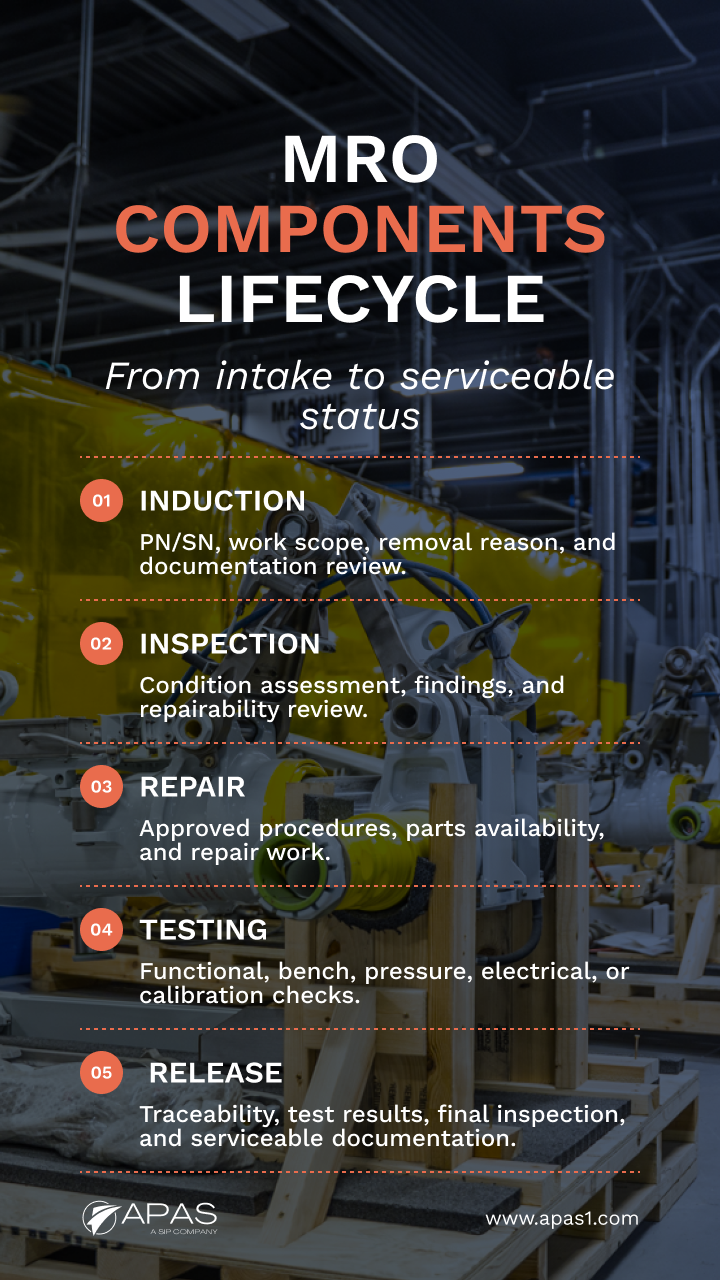
Once inspection confirms the repair path, the component enters the repair and parts provisioning phase.
This phase depends on the approved repair data, technical scope, parts availability, tooling, test capability, and customer approval process.
Repair activities may include:
Parts provisioning can become one of the most important factors in the repair cycle.
If required parts are available and properly documented, the repair can continue more smoothly. If parts have limited availability, unclear traceability, or long sourcing timelines, the entire component workflow may be delayed.
This is why component repair is not only a shop-floor process. It is also a supply chain and documentation process.
For operators, visibility into parts status is essential. Knowing whether a unit is awaiting teardown, awaiting customer approval, awaiting parts, in repair, or in testing helps maintenance planning teams make better decisions about fleet availability.
Testing is one of the final control points before a repaired component can move toward release.
The objective is to verify that the repaired component meets the applicable requirements, procedures, and test criteria.
Depending on the component, testing may include:
Testing does not operate in isolation. It supports the broader maintenance and release process by providing evidence that the component has met the required test criteria after repair.
If the component fails testing, the unit may be returned for inspection or repair for further evaluation. This can create a rework loop, which affects turnaround time and repair visibility.
For this reason, test results should be clearly documented and connected to the work order, repair scope, and final release package.
The release phase confirms that the required maintenance actions, inspections, tests, and documentation have been completed according to the applicable procedures.
A complete release package may include:
The release documentation supports the component’s serviceable status and provides the records needed for the operator’s installation and acceptance process.
This distinction matters. A repaired component is not only evaluated by whether the physical repair was completed. It must also have the documentation needed to support traceability, audit readiness, operator records, and future maintenance decisions.
Incomplete or unclear records can create delays after the technical work is finished. For operators and sourcing teams, documentation quality is part of supplier quality.
Delays in component MRO often occur at handoff points.
Common bottlenecks include:
These delays may not always be visible from the outside. That is why repair status communication is important.
A strong repair management process should help the operator understand not only that a component is delayed, but why it is delayed and what the next step is.
Repair management helps connect the technical, logistical, and commercial parts of the component MRO lifecycle.
Instead of treating each repair as a standalone event, repair management gives operators more visibility into:
This visibility is especially useful for airlines, operators, brokers, and sourcing teams managing multiple suppliers or urgent repair needs.
When repair visibility improves, maintenance planning becomes more predictable. Teams can make better decisions about spares, exchange options, operational risk, and downstream schedule impact.
APAS supports operators with component-level MRO, repair management, parts support, documentation, testing coordination, and logistics support from Miami.
The value of this model is not only performing the repair. It is helping operators understand the repair path from the moment the component enters the process until it is released.
APAS helps support visibility across key stages:
For sourcing and TechOps teams, this helps reduce uncertainty across the repair cycle.
When a component is removed from service, the main question is not only “Can it be repaired?” The better question is:
What path gives the operator the clearest technical, documentation, and availability outcome?
That may involve repair, replacement, exchange, DER-approved data where applicable, or additional evaluation depending on the component, condition, documentation, and urgency.
Operators should provide the part number, serial number, removal reason, fault description, aircraft platform when applicable, urgency level, available records, photos if useful, and any previous repair or removal history.
Delays may occur because of incomplete documentation, unclear fault descriptions, additional findings during teardown, parts availability, customer approval delays, testing failures, rework, or release documentation gaps.
Repair management helps operators track where a component is in the lifecycle, what findings have been identified, what decisions are pending, and what documentation is needed before release.
Documentation may include induction records, inspection findings, repair work order, parts traceability, test results, final inspection records, and release documentation where applicable.
Operators may evaluate different paths when repair scope, parts availability, cost exposure, documentation, urgency, or approved repair data affect the best technical and operational decision.
The MRO components lifecycle is a connected system.
Induction, teardown, repair, parts provisioning, testing, documentation, and release all affect repair visibility and operational planning.
For operators, the challenge is not only getting a component repaired. It is understanding where the component is, what decisions are pending, what documentation supports the work, and what path best protects aircraft availability.
For APAS, component-level MRO and repair management are part of a broader support model: helping airlines, operators, brokers, and sourcing teams move through the repair cycle with better visibility, clearer documentation, and stronger coordination from Miami.
Need visibility into a component repair process? Contact APAS with the part number, serial number, issue description, urgency level, and available documentation.