Landing Gear Exchange & AOG Support: Protecting the Schedule During Overhaul
How a landing gear exchange program and 24/7 AOG support protect the schedule during overhaul by cutting aircraft downtime to the installation window.
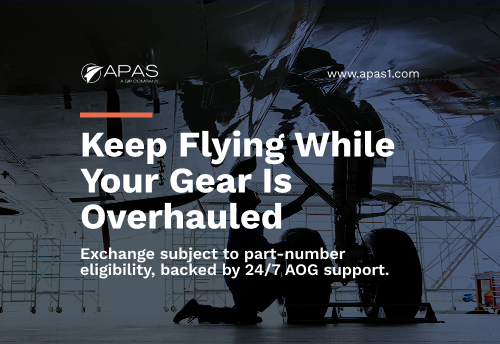
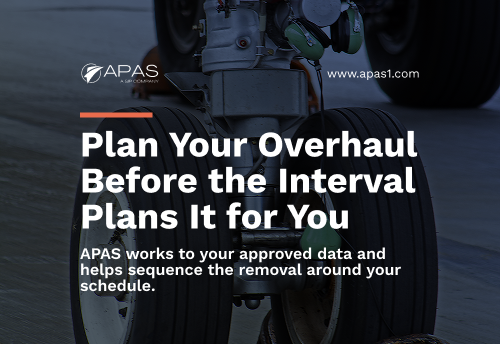
A landing gear exchange separates the aircraft's downtime from the shop's timeline. The operator receives a serviceable, eligible assembly while their own unit goes through overhaul — so the aircraft is down for an installation window, not for a full shop turnaround.
Paired with 24/7 AOG support, that is often what keeps a schedule intact.
Here is how it works, and when it is the right call.
The Problem: Overhaul Turnaround Versus Aircraft Downtime
When an aircraft's own gear goes to the shop for overhaul, the aircraft normally waits for that same unit to come back through disassembly, inspection, repair and test.
That turnaround is driven by the work scope and the findings. While it runs, the aircraft is not earning.
The core issue is that overhaul turnaround time and acceptable aircraft downtime are two different clocks.
An exchange program exists to break the link between them, so the aircraft is not held hostage to the depth of its own shop visit.
How a Landing Gear Exchange Program Works
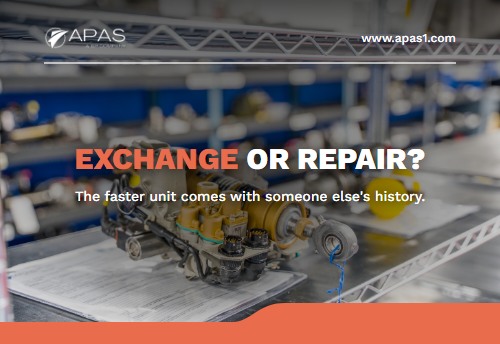
In an exchange, the operator receives a serviceable, ready assembly for their aircraft while their removed unit goes into the overhaul process.
The aircraft is down only for the removal and installation window, rather than for the entire shop turnaround.
Exchange availability is tied to the part number: the incoming unit has to be an eligible, approved match for the operator's application.
APAS supports exchange inventory subject to part-number eligibility, which is why confirming eligibility for your specific part number is the first practical step.
When Exchange Makes the Most Sense
Exchange is most valuable in three situations: when the overhaul sits on the critical path for aircraft availability, when the work scope is likely to be deep, or when the removal cannot be neatly absorbed into a long scheduled check.
In those cases, the shorter installation window is worth far more than the cost of coordinating an exchange.
It is equally valuable as an AOG remedy. When a gear issue grounds an aircraft unexpectedly, waiting for a full overhaul is rarely acceptable — and an eligible exchange unit can be the fastest route back to service.
Exchange
Waiting for your own unit
Aircraft is down for
The removal and installation window
The full shop turnaround
The two clocks
Separated — the shop works on its own timeline
Tied together
Works for
Planned removals and AOG events
Whatever the schedule can absorb
What it depends on
An eligible, approved match for your part number
Nothing — but you carry the full downtime
First step
Confirm exchange eligibility by part number, before you need it
Book the shop slot
Best fit
Overhaul on the critical path, deep expected work scope, or a removal that no check can absorb
Removals that fit inside a long scheduled check
AOG Support When the Gear Grounds an Aircraft
An aircraft on ground because of a landing gear problem is one of the more disruptive events an operator can face. The gear is not something that can be deferred or worked around.
Speed of response, availability of an eligible unit and clear communication all matter at once.
Combined with exchange eligibility for the affected part number, that response is aimed at getting the aircraft moving again with the least possible delay.
What Determines Landing Gear Turnaround Time
Turnaround is not a single fixed figure. It depends on the specifics of the job.
Understanding the drivers helps operators set realistic expectations, and decide whether exchange is the better route.
That mix lets an operator choose the path — planned exchange or AOG response — that best protects the schedule.
To move quickly, send the part number, serial number, aircraft application and requested service, and ask about exchange eligibility for that part number.
Having the details ready lets the AOG desk and the shop act without waiting on missing information.
Frequently Asked Questions (FAQ)
How does a landing gear exchange program work?
In a landing gear exchange program the operator receives a serviceable, part-number-eligible assembly for their aircraft while their removed unit goes through overhaul on a separate timeline. The aircraft is down only for the installation window instead of the full shop turnaround. APAS supports exchange inventory subject to part-number eligibility.
Can an exchange unit help with a landing gear AOG?
Yes. When an aircraft on ground is caused by a landing gear issue, an eligible exchange unit can be one of the fastest routes back to service, because it avoids waiting for a full overhaul. APAS pairs this with 24/7 AOG support to triage the situation around the clock.
What affects landing gear turnaround time during overhaul?
Landing gear turnaround time depends on the work scope in the maintenance manual, the findings from disassembly and NDT, parts availability, whether parts can be repaired rather than replaced, and the documentation required for return to service. Because these vary by job, turnaround is not a single fixed figure.
Is a landing gear exchange unit approved for my aircraft?
A landing gear exchange unit must be an eligible, approved match for your part number and aircraft application, which is why eligibility is confirmed first. APAS provides exchange subject to part-number eligibility, so sharing your part number early lets the match be verified.
How fast is 24/7 AOG support for landing gear?
APAS provides 24/7 AOG response, so a landing gear AOG can be triaged at any hour. Speed then depends on an eligible unit or repair path for the specific part number. Sending the part number, serial number and aircraft application up front lets the response move without delay; no specific turnaround time is promised here.
Rethink Repairs. Reclaim Your Budget.
Explore how DER Repairs from APAS can reduce costs, speed up turnaround, and extend component life—without compromising safety or compliance.

.png)