Cold-Weather Component Checks: What Winter Does to Rotables
Cold weather is hard on tires, struts, brakes and batteries. See which rotables to check before winter and how to decide repair or exchange before the season.
Cold-Weather Component Checks: What Winter Does to Rotables
A cold-weather component check is a short review, done before the season starts, of the removable parts that low temperatures stress first, paired with a decision made while the shop still has room: which units get inspected now, which get an exchange unit staged, and which simply wait for a real finding.
Aircraft component maintenance in winter is mostly a planning problem. A tire that has lost pressure overnight or a battery that will not hold a charge is cheap to handle in a hangar in November and expensive to handle on a ramp in January.
What does winter expose in aircraft components?
Winter exposes pressure, moisture and electrical reserve. Cold lowers tire and strut pressure, water that reaches brakes and wheels can refreeze, and battery condition becomes a pre-season item.
The public winter guidance we reviewed, from AOPA and the FAA, is written mostly for general aviation pilots. It shows where cold causes trouble, but it is not a removal criterion for a commercial transport, and nothing here replaces the aircraft maintenance manual or the component manual for your type.
We also did not find a current, public failure statistic for commercial aircraft components by season, so this article does not offer one.
Which rotables deserve a look before winter?
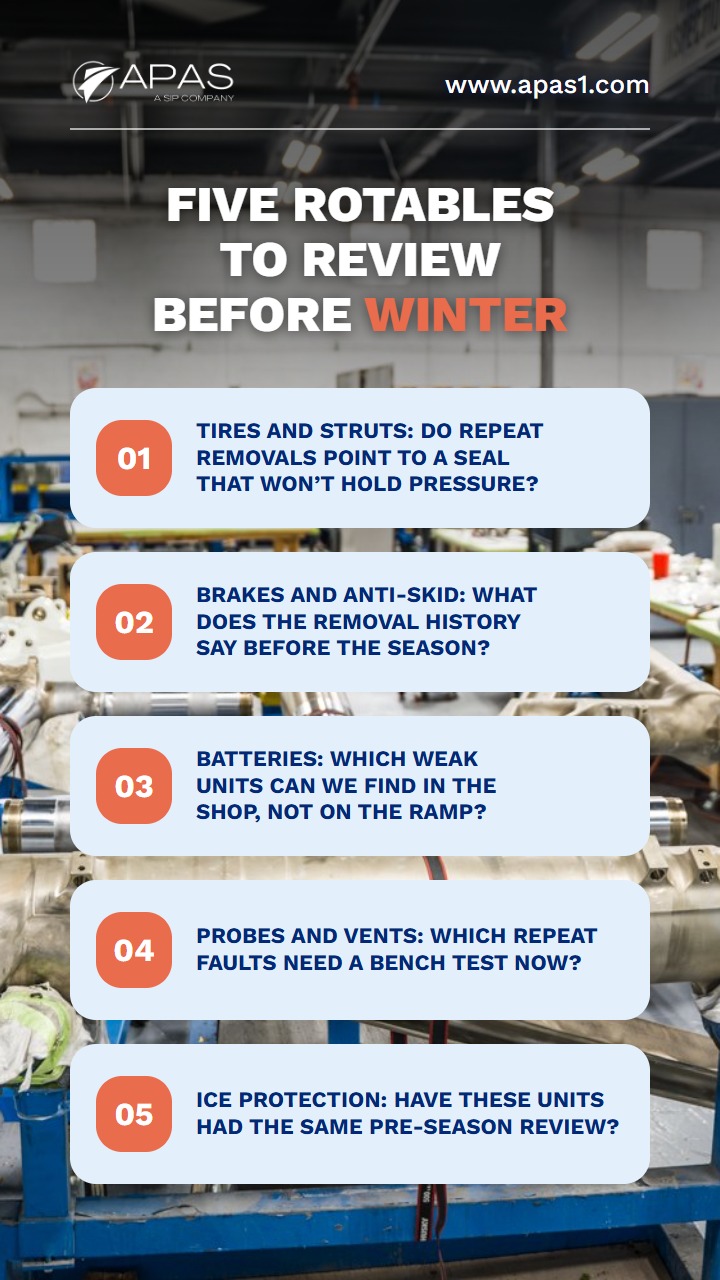
The guidance points to five groups of components. For each one, the question for a maintenance planner is the same: does the removal and repair history of the units on my fleet suggest a problem I should settle now?
Brakes and anti-skid units. AOPA warns that warm brakes melt snow that then refreezes and can hold the airplane in place. EASA explains that anti-skid sensors adjust brake pressure so wheels do not lock on slippery surfaces, which is a reason to review the removal history of brake and anti-skid units before the season.
Batteries. Battery testing and charging sit on AOPA's pre-winter list. For a transport fleet the interval and limits come from the manual, but the planning point holds: find the weak units in the shop, not on the ramp.
Probes and vents. AOPA's list says to cover or clear the pitot tube and vents. A probe or sensor that returns with a repeat fault is a candidate for bench testing now, not after the first cold snap.
Ice detection and protection hardware. EASA notes that most modern aircraft carry ice-detection and de-icing technology to protect exposed surfaces. Components in these systems deserve the same pre-season review as the rest.
AOPA also reminds readers that many of these tasks are better done, or must be done, by a certificated mechanic. The list is a prompt for the planning meeting, not a work card.
Component group
What cold does
Question for the planner
Source
Tires, struts and wheel assemblies
Lowers tire and strut pressure; a worn strut seal will not hold air
Do repeat removals point to a seal that won't hold pressure?
AOPA, FAA
Brakes and anti-skid units
Snow melted by warm brakes can refreeze; anti-skid adjusts pressure on slippery surfaces
What does the removal history say before the season starts?
AOPA, EASA
Batteries
Testing and charging become a pre-winter item
Which weak units can we find in the shop, not on the ramp?
AOPA
Probes and vents
Pitot tube and vents need to be covered or cleared
Which units came back with a repeat fault and need a bench test now?
AOPA
Ice detection and protection
These systems protect exposed surfaces from ice
Have these components had the same pre-season review?
EASA
How do you decide between repair and exchange before the peak?
Decide by part number, before the removal, using four questions: is a serviceable unit eligible for my aircraft, will my own unit come back in repairable condition, is the time saved worth the history I give up, and does it make sense to carry the spare myself? Our guide to choosing between rotable exchange and repair walks through each one.
Winter adds a scheduling reason to settle this early. A planned removal in November can usually absorb a full repair cycle. The same removal in the middle of the season may not, and an exchange unit that was never identified becomes an AOG search.
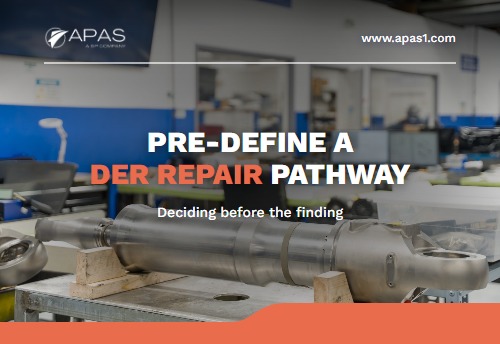
For any claim about how a specific type behaves in the cold, look at the FAA's Service Difficulty Reporting system and its Airworthiness Directives database rather than at a general checklist. And for the most expensive units, ask early what happens if teardown shows damage beyond published limits. That situation is covered in how to pre-define your DER repair pathway.
Pull the removal history for tires, struts, brakes, anti-skid units, batteries and probes on the fleet that will fly in cold climates, and flag repeat removals.
Mark which of those part numbers are rotables with a likely exchange option, and which would need a repair cycle.
Confirm in the type's manuals, and in the FAA's service difficulty and airworthiness directive records, what is actually known for your aircraft.
Agree in advance who approves an exchange or an out-of-limits repair, so a removal does not wait for a meeting.
A plan made in November is cheaper than a search in January
Treat the start of the season as a planning date: know which units to inspect, which exchange options exist, and who signs off when a finding goes beyond the book.
If a removed unit raises the repair-or-exchange question, APAS supports operators from Miami with component-level repair, exchange and 24/7 AOG support, and its technical team can review the options with the unit's condition and documentation in hand.
Frequently asked questions
What is a cold-weather component check?
It is a short review, done before the season starts, of the removable parts that low temperatures stress first. It ends in a decision per unit: inspect it now, stage an exchange unit, or wait for a real finding.
Which aircraft components does cold weather affect most?
Public winter guidance from AOPA, the FAA and EASA points to five groups: tires, struts and wheel assemblies; brakes and anti-skid units; batteries; probes and vents; and ice detection and protection hardware.
When should you decide between repair and exchange for winter?
Before the removal, by part number. A planned removal in November can usually absorb a full repair cycle; the same removal in the middle of the season may not, and an exchange unit that was never identified becomes an AOG search.
Does this checklist replace the aircraft maintenance manual?
No. The guidance behind it is written mostly for general aviation pilots. For a commercial transport, removal criteria come from the aircraft maintenance manual and the component manual for your type, and type-specific behavior in the cold is better checked in the FAA's Service Difficulty Reporting system and Airworthiness Directives database.
Rethink Repairs. Reclaim Your Budget.
Explore how DER Repairs from APAS can reduce costs, speed up turnaround, and extend component life—without compromising safety or compliance.